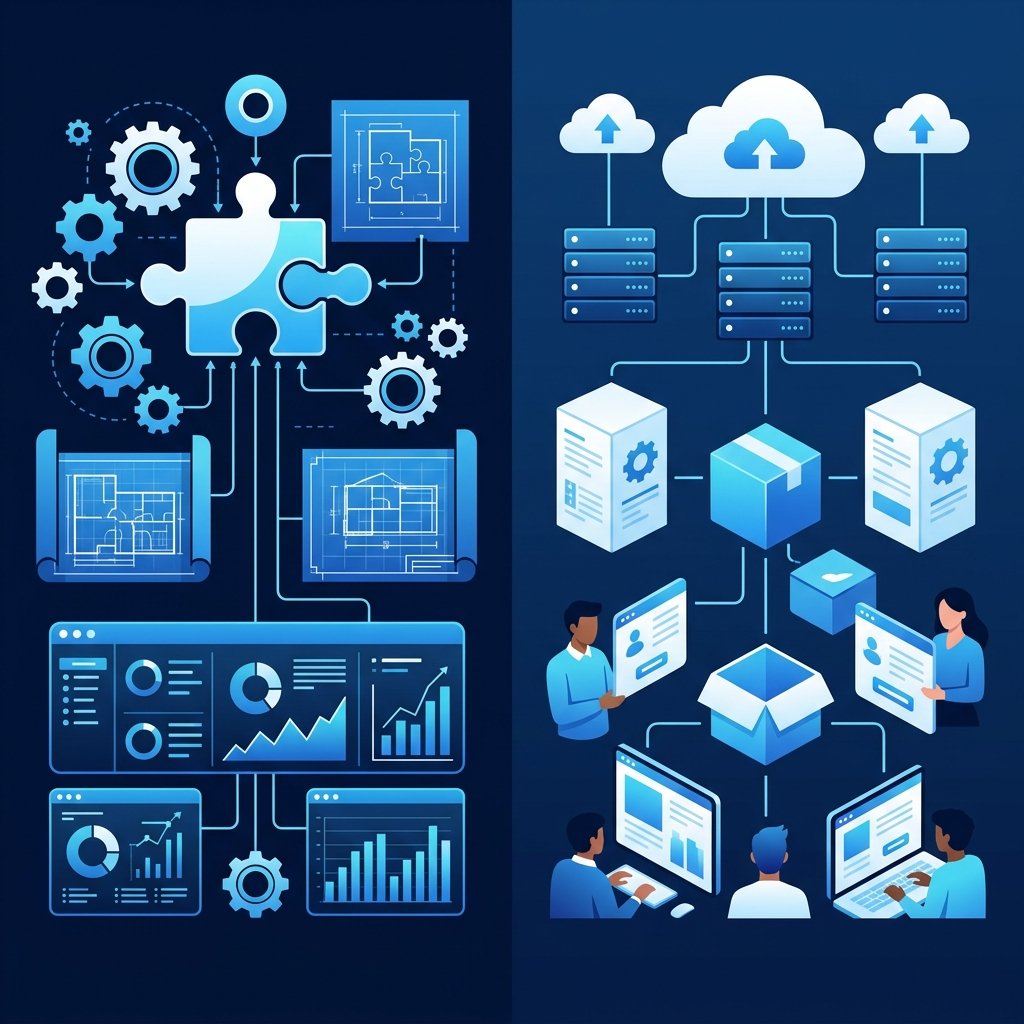
Custom Software vs Ready-Made SaaS Tools: Which One Actually Fits Your Business?
Every growing business eventually hits the same wall. The spreadsheets stop being enough, the WhatsApp groups stop being enough, and the founder ends up juggling five different apps just to run one business.
At that point, two paths open up: pick a ready-made SaaS tool off the shelf, or invest in custom software built around how the business actually works.
Both are valid. Neither is automatically "better." The right call depends on what stage the business is at, and how much its workflow looks like everyone else's — or doesn't.
What Ready-Made SaaS Tools Are Good At
Off-the-shelf SaaS products exist because most businesses share a lot of common ground. That's exactly where they shine:
- Fast to start — Sign up today, onboard the team tomorrow, no development cycle to wait for.
- Lower upfront cost — A monthly subscription is easier on cash flow than a development budget.
- Proven and tested — Thousands of other businesses are already using the same workflows.
- Maintained for you — Updates, security patches, and new features ship without extra effort.
For a business just getting started, or one whose needs are fairly standard, this is often the smarter first move.
Where Ready-Made Tools Start to Break Down
The cracks usually show up later, not on day one. As a business grows or serves more than one type of customer, generic tools start working against the team instead of for it:
- Feature bloat — Paying for modules the business will never touch, just to get the one it needs.
- Workflow mismatch — Forcing a unique process (like managing gyms, clinics, and retail from one system) into a tool built for a single industry.
- Integration limits — Connecting five different SaaS tools together, and hoping none of them break when one gets updated.
- Rising costs at scale — Per-user or per-feature pricing that quietly becomes expensive as the team grows.
This is the point where many founders start asking whether a custom-built system would actually cost less in the long run.
What Custom Software Solves That SaaS Can't
Custom software isn't about building something fancier it's about building something that fits. The advantage shows up in a few specific places:
- Built around your exact workflow — No bending your process to match someone else's product roadmap.
- One system, not five — CRM, billing, scheduling, and communication living in a single platform instead of stitched-together tools.
- Full ownership of data and logic — No vendor lock-in, no surprise pricing changes, no losing access if a SaaS company shuts down.
- Room to grow sideways — A platform designed to serve multiple business types or locations from day one, instead of hitting a wall later.
This is especially relevant for businesses that operate across more than one vertical a system built to manage memberships, staff, and billing for a gym can often be extended to do the same for a salon or a clinic, without starting from scratch.
So, Which One Should You Choose?
There's no universal answer, but there is a simple way to think about it:
- If the business runs on standard processes that thousands of other companies share, a ready-made SaaS tool is usually the faster, cheaper route.
- If the business has outgrown generic tools, juggles multiple disconnected systems, or serves more than one type of customer with different needs, custom software starts to pay for itself.
The smartest businesses don't pick one path forever. Many start with SaaS to move fast, and transition to custom software once their workflow becomes too specific or too valuable to leave to a one-size-fits-all product.